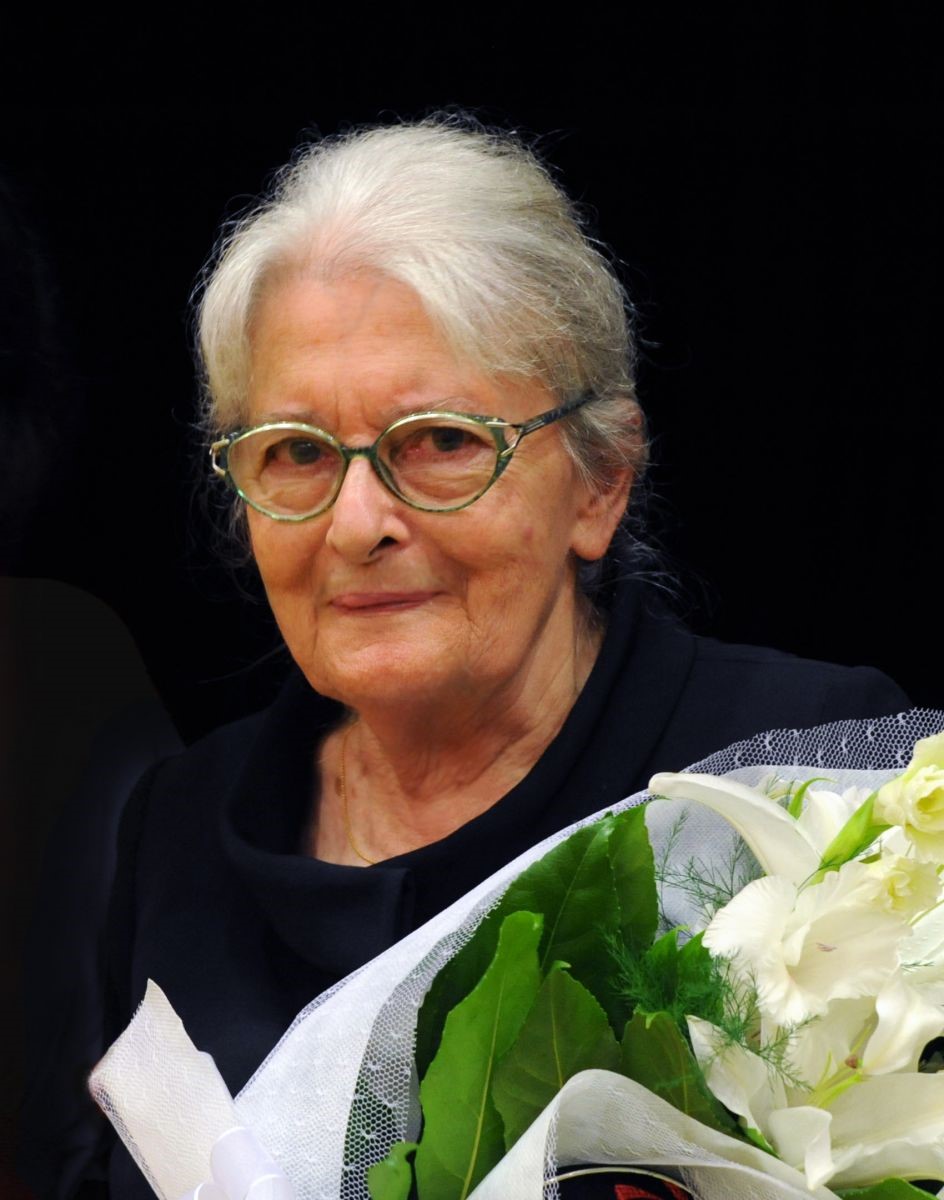
We lost İoanna Kuçuradi on 2 October 2026. In remembering her, I want to think about her ideas alongside the questions ahead of us, rather than treating them only as a legacy of the past. UNESCO Türkiye
As someone who works with artificial intelligence, one question comes first for me: As we develop more powerful systems, what kind of human life do we want to make possible?
Producing faster, making more accurate predictions, automating more work… Each of these may matter. Yet none, on its own, explains why we should build such a future. Becoming capable of doing more is not the same as becoming better at distinguishing what is worth doing.
In an interview published in February 2026, Kuçuradi responded to the question of whether we should fear artificial intelligence:
“We should fear ourselves, rather than artificial intelligence.” Cumhuriyet
In the same interview, she stressed that technological developments can be used both to protect values and to undermine them, and warned against turning means into ends. I find this perspective valuable because it prevents us from hiding our own responsibility behind technology, without dismissing technological risks. Cumhuriyet
This article does not attempt to construct an AI doctrine in Kuçuradi’s name. It is an exploration of how human–AI collaboration might be built, drawing on her thinking about humanity, value, ethics, and human rights.
Human value is not a performance score
When discussing the future of AI, we can easily fall into a narrative of competition: Who will write better, a human or a machine? Who will learn faster? Who will be more creative?
But tying human value to the outcome of that competition may mean choosing the wrong criterion from the start.
In Kuçuradi’s approach, human value is related to the structural possibilities we possess as a species. Achievements such as producing knowledge, practising science and art, and building valuable relationships are realisations of these possibilities. This is not a performance score arrived at by adding up each individual’s achievements. DergiPark
I read this distinction in the age of AI as follows: A system doing a particular task better than us does not make the person who performs that task less valuable. Having human rights cannot be conditional on proving economic usefulness, superior intelligence, or uninterrupted productivity.
The possibilities that should be protected in a child, a person unable to work, or someone who cannot keep up with a new technology must be considered independently of their competitiveness.
The reason to protect people is not that they can do something machines cannot yet do.
At the same time, protecting human value does not mean treating all human actions as equivalent. Kuçuradi’s approach to value recognises differences between evaluations without concluding that all evaluations are equally correct. Seeing people as equal in their rights must not be confused with seeing everything they do as ethically equivalent. Philosophical Society of Turkey
Ethical knowledge goes beyond ready-made rules
In Kuçuradi’s thinking, ethics is not simply a list of rules telling people how to behave. It is a field of knowledge that investigates the problems of value arising in people’s relationships with others and with themselves. There is therefore a significant distance between talking about ethics and making evaluations based on ethical knowledge. Philosophical Society of Turkey
That distance can also appear in the design of artificial intelligence.
Consider a recruitment system that examines the characteristics of people hired in the past and ranks new candidates. Successfully reproducing earlier preferences does not establish that those preferences were right. Who was excluded in the past, and why, must be examined separately.
Kuçuradi’s distinctions between attributing value, appraising value, and correct evaluation offer guidance here: Finding something important because of its relationship to us, judging it through established value judgements, and trying to understand the thing itself to reveal its value are different operations. DergiPark
Drawing on this distinction, the question we ask AI should go beyond “What pattern exists in historical data?” We should also ask: “What does this pattern represent, under what conditions did it emerge, and whose possibilities will be affected if we apply it again?”
Examining the concrete situation does not mean abandoning criteria. Investigating the conditions of each case is different from assuming that everyone’s preference is automatically right. My conclusion is this: Considering context is one of the conditions for actually making an ethical evaluation.
What we do with accurate information
In a 2021 interview about digitalisation, Kuçuradi emphasised that even when the information presented is accurate, how it is used must be considered separately. This distinction deserves attention in AI: The accuracy of information and the ethical value of what is done on its basis are different questions. DergiPark
Suppose a system accurately predicts which message would persuade a person most easily. That accuracy does not justify exploiting the person’s vulnerabilities. The same information can help someone understand an option better, or steer them without their awareness.
This is why I find it insufficient to define human–AI collaboration solely in terms of collecting more data or producing more accurate predictions.
A more meaningful collaboration should make the information behind a decision visible. It should help us notice what is missing, what is uncertain, and which people have been overlooked. It should make room for questioning the desired outcome itself, as well as helping us reach it faster.
A system that lists ways for a manager to reduce costs can be useful. But if it hides the burdens those savings would place on people, it may be leaving out one of the decision’s most significant dimensions.
Good cognitive support improves the question as well as speeding up the answer.
Human approval and human responsibility
I do not conclude from this that “Let a human make the final decision, and the problem is solved.”
A person approving a suggestion on a screen may not have truly evaluated it. If they cannot see its basis, have no time to challenge it, or lack the authority to depart from the system, their presence may be merely formal.
In the collaboration I propose, the human role should not be reduced to an approval button. A person should be able to examine the reasoning behind a decision, challenge false assumptions, and change the decision when necessary.
Responsibility should also extend beyond the last person who uses the system. Those who set its objectives, select its data, develop it, and embed it in an organisation’s work should be part of an arrangement in which they must explain their own choices.
This does not mean requiring human approval for every small operation. For me, the distinction is between an arrangement in which effects on people’s lives can be seen, questioned, and corrected, and one in which those effects remain invisible.
In speaking about human–AI collaboration, I also do not automatically assume that AI is a human-like moral agent. Taking Kuçuradi’s warning about anthropomorphism in the language of artificial intelligence seriously, I think we should first ask what people do with these systems and how they transform their relationships with one another. Cumhuriyet
Learning means more than receiving an answer
Imagine two ways of designing an educational application.
In the first, a student asks a question and receives the solution. In the second, the application helps the student understand where they are struggling, shows different approaches, and asks them to develop their own reasoning.
Both may be appropriate in some situations. But if we measure only how quickly the task is completed, we may overlook what the student has learned.
Kuçuradi says that children need to develop their ethical abilities as well as their cognitive abilities, and emphasises education in ethical values and human rights. Drawing on this, I believe the purpose of learning with AI should extend beyond access to the correct answer. DergiPark
The same question applies to working life. Will time gained through automation serve to give people more work, or create room for learning, thinking as they produce, and building more meaningful relationships with others?
These are not questions technology can answer on its own. They are our design and management choices.
When evaluating an AI system, I therefore propose placing this question alongside the quantity of its output: What are the people working with this system becoming better able to do, understand, and evaluate?
Measuring success through human possibilities
Kuçuradi’s approach to human rights rests on knowledge of human value. Human rights are understood here as ethical demands concerning the protection of human possibilities, beyond the statements listed in documents. Philosophical Society of Turkey
Bringing this approach into AI design requires me to change the criterion for success.
It should not be enough for a system to benefit the organisation that buys it. We should also consider the situation of people affected by the system who have no seat at the design table. A person’s ability to correct false information, challenge an outcome that affects them, and access the support they need are starting conditions for the design I propose.
These are practical suggestions I have developed from Kuçuradi’s understanding of human rights, rather than rules she wrote directly for AI.
This perspective does not require opposing technology. It requires us to identify more carefully the human purposes for which technology is worth developing. It requires asking what increased speed, saved labour, and wider access become in human life.
The question I carry into the future
For me, remembering Kuçuradi meaningfully means revisiting the questions I ask of my own work through her thinking, beyond adding her name to a technology discussion.
What do I count as success? Whose situation am I failing to see? Am I evaluating a person through the function they perform in a system? As we develop more powerful tools, are we questioning the purposes for which we use them sufficiently?
Drawing on her thinking, this is the sentence I formulate for the future of AI:
We should develop artificial intelligence to do more valuable things while protecting human possibilities, as well as to become capable of doing more.
There is no ready-made recipe for this. There is work to be done in each concrete situation, requiring knowledge, attention, and responsibility.
I remember İoanna Kuçuradi with respect. I want to keep her legacy alive by continuing to ask about human value as we discuss the future.